What does “defund the police” mean?

The demand to “defund the police” seems, on the face of it, to be ridiculous. The common, dismissive reaction is: Communities need police and police need to be paid. But it isn’t that straightforward.

In the US, because social programs have long been code for ‘programs for people who aren’t white’ (even though, in fact, poorer whites benefit from them in greater numbers than POC), they have all been starved of funding. Affordable housing, drug treatment, social work, health care, mental health care, day care, quality public education, vocational training, etc, etc. are all under funded or aren’t part of the social welfare structure at all.

Additionally, the fetishizing of the 2nd Amendment has created a country awash in guns, which has created a domestic arms race. The police argue they have to have more funding so that they won’t be out gunned.

Meanwhile, overfunding the military has resulted in an endless supply of military equipment created for a military that isn’t using it, which is then repurposed by domestic police forces.

In part, this is because, post 9/11 federal and state funding for police forces has prioritized and even incentivized military-grade purchases for ‘anti-terror’ efforts.

“Defund the police” needs a new slogan. But it’s hard to come up with a pithy way of saying:

“Instead of spending so much money on things that kill and incarcerate people and don’t solve any of the problems that most average Americans are dealing with, use that money to fund social services, health services, education and housing. Then we wouldn’t need such large, militarized police forces and more prisons than any other country on earth.”

Until that happens, social problems will continue to be treated as law and order problems. And law breakers will continue to be treated as an ‘enemy’. Of course, under white supremacy this domestic ‘enemy’ is and always has been primarily people of color.

Police are equipped for battle. They are not equipped to be a public service. Battle is more expensive than public services. But private interests profit from battles (both foreign and domestic). They don’t think they’ll profit from a healthy, safely housed, well-educated population. Of course they’re wrong. A rising tide raises all ships.

We need public servants, not a domestic army.

A Day in the Life (Faculty Edition)

This was published in Inside Higher Ed on June 3, 2020.

Last week “Transforming Teaching and Learning” published an opinion piece by Norman Clark written from the perspective of a student at a college that chose to return to in-person teaching in the fall. This piece attempts to put faculty at the center of those calculations. This is compiled from conversations with faculty members about the preparations, consultations and new policies at colleges and universities — public and private, big and small — in 11 states.


You arrive on campus and walk across the quad to your building. Along the way, some of the students and faculty members you pass are wearing their masks properly, while others’ hang loosely in front of their noses and mouths. Students gathered in a group near the door are crowding their heads together looking at one of their cellphones. At least everyone is outdoors.

You use the door pull to go inside and walk up a narrow staircase as dozens of students pour past. It’s the mad rush between classes. You usually time your arrival so this doesn’t happen, but you were delayed this morning.

Arriving in the department offices, you clear out your mailbox with the hand that didn’t touch the door pull, use the other to open your office door and immediately clean your hands and the door pull with sanitizer you’ve bought yourself. The dispensers on campus aren’t refilled fast enough to keep up with the demand.

A student comes into your office, which isn’t large enough to keep six feet between the two of you. So you wear your mask while helping them. You wear glasses, which keep fogging as you try to look at the student’s work online. Over the course of an hour, you have three similar visits from students. One wears a bandana across their face, another a paper surgical mask and the third a vented mask that limits the inhale of particulates but not the exhale.

You anxiously look at the clock and realize that if you want to avoid the crowds between classes, you need to leave now. Your class is in another building, so you walk there, wait outside in the rain until the crowds clear, then go inside.

Before social distancing rules were put in place, this wide, shallow classroom held 45 students in nine rows of five. It was known as a cramped room. There are fewer than six feet between the front row of chairs and the whiteboard. You try to stand as close to the front wall as possible to put distance between you and the 15 students in the room.

When the decision was made in May to return to campus, faculty members asked to have Plexiglas shields installed at the front of each classroom, but the university couldn’t source that many; they were in short supply and too expensive.

The university spent precious funds installing cameras and microphones in each class so students who couldn’t or wouldn’t come to class could watch from home or from their dorm room. There were also questions about whether the HVAC vents would render shields useless as protection anyway. However, because you now have to wear a mask for the entire 50 minutes, you are yelling to be heard. And students commonly complain that the mics aren’t picking up everything professors are saying because of the masks they have to wear.

The class is supposed to be a discussion about documents the students were asked to read. You conduct the same discussion three times in a week, with a third of the class each time. As was often the case, a handful of students haven’t brought their books — but now they can’t share with others, so they aren’t contributing.

The rest of the students participate, but not in the lively way they would if they weren’t wearing masks. Over the course of the conversation, students keep having to adjust and readjust their masks with hands that have touched the desks and door pulls but that can’t be cleaned because the wipe and sanitizer dispensers are empty. The cost-cutting has meant that no new staff was hired to meet the sanitation demands, and the custodians can’t keep up.

Thankfully, the student who believes the pandemic is a hoax and started the semester ostentatiously wearing his mask dangling from his chin has finally stopped coming to class. It took three weeks and the involvement of the administration, the union, the campus police and the university’s legal counsel before it was finally determined that you had the right to insist that he wear a mask correctly or bar him from the classroom. You’ve heard from other students that he has now started a smear campaign against you on social media using memes created from screenshots from your recorded lectures.


When class is over, you are exhausted and hoarse. But you can’t wait for the halls to clear because you need to get to a meeting. The committee room was deemed large enough for the members to meet in person, even though CDC guidelines recommend that any gathering that can be held online should be.

When you questioned the choice to hold in-person meetings, you were told that you could participate online. But it was clear when you tried that if you wanted your views to be heard, and if you wanted to clearly hear the people gathered in the room, you had to be there, too. It’s obvious the room has not been disinfected before the meeting because you can see the ring from a mug on the table surface.

Returning to your office, you walk down the department hallway past colleagues’ doors that are usually open. Instead of collegial hellos and conversations, all the doors are closed except those of faculty who, like you earlier in the day, are trying to advise students while keeping a safe distance.

Officially, office hours are being conducted online this semester. But needy students “drop in,” and you and your colleagues know that if you turn them away you risk a poor evaluation for not being available when and how they want. The administration has made it very clear that student evaluations will continue to be considered in tenure and promotion decisions, despite the extraordinary circumstances.

You teach five days a week, so your teaching day ends early enough that in a normal semester you’d be able to leave now, work from your home office for the rest of the day and be there to meet the school bus.

But there is no school bus anymore, so your mother (who has COPD) is picking your children up and caring for them this afternoon. She has to do this because you need to record two lectures before the afternoon is over. Faculty members can’t take their university desktop computers home because they are networked. And you need its higher-quality camera and microphone.

The course you taught that morning now has all of the contact hours taken up with the same discussion repeated three times. So you have to create online lectures to cover all the content material. You don’t receive any additional compensation for this despite the fact you are clearly exceeding the three contact hours standard for a lecture course.

Because the start of the semester was moved up to the middle of August, and you were teaching summer classes, you didn’t have time to prerecord all your lectures. Now it’s October and you’ve run out.

The other lecture you’re recording is for a Tuesday/Thursday class that was moved online at the last minute because no classroom could be found that was large enough to allow for social distancing even if each day only had half the students in attendance. Now you find yourself creating an online course while you are teaching it.

Back in May, faculty members were asked to declare whether they wanted to teach completely online in the fall. Instructors were assured that if they made that choice, it wouldn’t affect their performance evaluations. But the unpopularity of online classes (made very clear by the end of the spring semester) meant that you felt a responsibility to teach in person in case the enrollment numbers for your department dropped. Tenure lines and adjunct positions were already being eliminated.

When your dean told you in late July that your class would have to be online after all, you offered to teach another course online, as well, to free up classroom space. You had created an online version and taught it before. The university’s position was that you made that choice in May and any classes that don’t have to be online would remain in person because students prefer to be in the classroom. One section of that course only has 10 students coming to class now anyway, because three others are sick and those who sat closest to them are now in quarantine.

Arriving back home, you thank your mother without getting too close and send her home. Between you and your kids, your mom is potentially getting a lot of exposure to the virus. You put your mask in the laundry so that it’s ready to use tomorrow. You wash your chapped hands for the 10th time today.

You go online again, on your slow, personal home computer, to finish responding to all of your emails, modifying assignments and due dates for quarantined or sick students, and dealing with glitches in your suddenly online course. Eventually, your day of being a professor in a “hybrid,” “multimodal” semester is over.

No wait, it isn’t. Your dean is calling. Another faculty member is sick. (This makes eight so far in the college, all of whom were teaching three courses each.) Would you be willing to take over teaching a college writing course even though it isn’t your discipline?

After all, the dean reminds you, classes can still go on with students out sick. But they can’t continue if the professor isn’t there.

Turn Ourselves In Day

My short take on the Kevin Williamson saga is to say that I’m not convinced that we should pillory someone for following the anti-choice stance to its logical conclusion. In my opinion, a large part of the problem with this debate is that anti-choicers have been allowed to set the rules. The pro-choice camp keeps letting them (the misogynists) claim that this is about babies, not about women.

By jumping to say how terrible it would be to treat women who have abortions like murderers, pro-choice advocates aid and abet the misogynists who use the abortion debate as a smokescreen for what it’s really about.

It’s about women. It’s about oppressing women by reducing their ability to acquire power.

If we insisted that these idiots actually carry the ‘murdering babies’ argument through to its end, then it would finally, openly be about women. And the whole damn thing would fall apart.

Say: Ok – treat us all like murderers in the criminal justice system. I dare you.

Seriously propose to arrest the roughly 650,000 women who have an abortion each year in America.
Seriously propose to put them on trial for murder. And the women who had the 650,000 abortions the year before that. And the year before that.
It would be easy to find them guilty. There are medical records. Not hard to prove.

So why don’t they say that’s what they’ll do when they manage to overturn Roe and all these women are officially criminals?

Because they don’t really want us all dead or incarcerated. They just want us disenfranchised, economically trapped, dependent, and unable to resist the demands of the patriarchy: to serve and support the lives of men.

I’d love to see “Turning Ourselves In Day.” Imagine it: millions of women show up to their local police stations, en masse, and demand that they be taken into custody. Millions of women saying, “I’m your sister, your daughter, your mother, your neighbor, and you need to arrest me because, according to you, I’m a murderer.”

Go ahead. I dare you.

What to say about Aziz Ansari?

There are so many things wrong with the Babe piece about Aziz Ansari and I’m so busy that I really resisted responding. But here goes…

What to say about Aziz Ansari?

First of all, not much.

The Babe piece (and I’ll get to that name in a minute) was flawed in so many ways that, if it had anything else as its ostensible subject, the charitable thing would have been to pretend we hadn’t seen it. (As far as I’m concerned this is still the best course of action, but not a viable option, unfortunately.)

Perhaps, over time, it’s author and anyone else at Babe who are on the, um, ‘senior editorial staff’ will become better writers and editors, of better pieces, at better journalistic organs. In fact, I’m sure some of them will. But right now, what we’ve had to bear witness to is the train wreck of an unwitting subject poorly served by a bad writer. To make matters worse, it all happened under the oversight of an editorial staff without the skill or experience to stop this from happening.

There was a legitimate story to tell about these two people’s sad evening together, but the journalistic and/or social critique bona fides of Babe were simply not up to the task. And the resulting response elsewhere is consequently as confused and messy as that article.

The name of the website itself says a lot. Babe is obviously echoing Jezebel, or trying to. I can imagine the creators thinking that the name was staking claim to a subversive and empowering, ironic and self-knowing sort of feminism. Playing, with a wink, to the younger crowd for whom Jezebel is already a bit old and grizzled in its seriousness.

But who Jezebel was isn’t what a babe is. One’s a woman with agency, anger, and personality. The other’s a category, not even an actual person, named and called (cat called, even) by someone else. By a man.

So my initial response to this whole thing is to dismiss it. Not because we shouldn’t have a conversation about how gendered power dynamics have made men bad lovers and made women settle for unsatisfying sex lives. Not because we shouldn’t have a conversation about why we’re surprised that the obliviousness that men’s entitlement affords them in every other aspect of their lives carries over into sexual interplay. And  not because I’m a huge fan of Ansari or because I want to blame “Grace” for not being the right brand of feminist.

I want to dismiss it because it isn’t what #MeToo is about. That’s the fundamental flaw in the article and in the reaction to it. By responding in ways that accept the premise that this article is part of that conversation we’re already being suckers. I can say, “No, sorry. This is about something else. You may want to exploit this moment and push your way in by name dropping and sloppy writing. But no.”

We’re allowed to show discernment and discretion about where we turn our attention. To be a cause worth fighting for does not require us to all be unified in a single vision. There can be debates about all sorts of things. But we shouldn’t feel pressured to engage in debates over things that aren’t worthy.

To be a legitimate movement does not require perfection, either in our behavior or our insight. This is the classic trap and the only way we won’t fall into it is to not. give. any. fucks.

To be empowering, supportive, pissed-off, uncompromising, nurturing, strategic women in this moment does not require us all to be lobotomized. The article was stupid. And facile. And not worth my attention.

And Oh, yeah. Aziz Ansari along with many other men need to be told that they are seriously bad at sex. Some other day, when I feel so moved, I’ll write that piece. But not today. I’m busy.

What to say about Al Franken, redux.

There are various anxieties swirling around right now. Masha Gessen has written a piece for The New Yorker in which she says that those on the left are starting to police sex as a surrogate for the aggression that can’t be policed – unjust tax plans, travel bans, etc. This is the second article that she’s written about the #MeToo developments of the past couple of months. And others  have drawn similar parallels and articulated similar fears. But as much as I am in awe of her insight into the mechanics of political authoritarianism, Gessen is misunderstanding the sources of moral panics and sex panics. As a result, she and others are misreading the dangers of this moment.

Consensual, healthy, sexual exchanges between men and women are not at risk. Trust me. Men who already engage in the negotiation of sexual opportunity and mutual desire from a position of respect and humility are going to be just fine.

To fear otherwise is problematic on a bunch of levels. First, it assumes that women don’t want to have sex. They do. A healthy, heterosexual, otherwise unencumbered woman isn’t looking for a reason to say no. She’s looking for the assurances she needs to say yes.

Second, it mischaracterizes past causes of moral panics or sex panics. They aren’t whipped up by the targets of oppression; they’re whipped up by those who are used to unchallenged power, and they do it in order to police the oppressed. So to fear that women are suddenly going to see phallic dangers where there aren’t any because their weak little minds have been worked up into a prudish frenzy is, to put it plainly, bullshit.

This brings us to the third and truly dangerous problem. It’s the real moral panic that is being deployed by the powerful as a weapon in this moment: the fear that there’s a ‘lack of due process’. It’s ingenious, really. And it happens every time. Whenever a group of people critiques the existing structures that have kept them powerless, their lack of access to the mechanisms of law and order are thrown back at them as evidence of their lawlessness. Never mind that fairness and reasonableness get defined by others and that faith in institutions is the quintessential privilege of the powerful. Those who’ve never enjoyed due process are suddenly scolded for not valuing it sufficiently.

And this is what brings us, finally, to Franken.

He has been forced to resign from the Senate because six women have accused him of various forms of assault or attempted assault. And make no mistake, forcibly kissing a woman is an assault, grabbing a woman’s ass is an assault. If it was when Trump described himself doing it, then it is when Franken does it. The fact that worse things are too, and that women put up with much worse all the time, doesn’t make it any less so. And the fact that Franken remembers it differently isn’t an indication that it didn’t happen. It’s an indication of why and how something like that can be done by a man who also sees himself as a feminist.

But, and this is what gets us back to due process, he isn’t being arrested. He isn’t being charged with a crime. He’s losing his job. That’s all. And the same goes for Conyers, and Hockenberry, and all the men who, outside the media scrutiny, have resigned from state houses around the country over the past few weeks.

Crying out about the lack of due process in these cases really needs to be examined closely. We need to go to the logical end point of arguing that the legal standard for conviction of a crime in a court of law is what must be met in order for a man to lose his job. Really? For predatory men to no longer thrive in their workplaces we must be able to convict?

Finally, and in a similar vein, I’m also reading from various precincts that the Democratic Party and the left-leaning media are inflicting mortal blows to their own body politic at its weakest moment. Apparently, according to this narrative, #MeToo is doing the enemy’s work for them by sowing chaos, fear, and self-doubt in the halls of liberal power. In other words, unreasonable women (dare I say shrill? vindictive? hysterical?) are now to blame for the state of the Democratic Party. Just as Clinton was a weak candidate and white women elected Trump, we find, once again, that the double X chromosome is the source of the problem.

I wonder if Democrats who find no difficulty recognizing that the GOP and Trump are preemptively vilifying Mueller, his team, and the FBI, can see that #MeToo and its fallout are being set up for the blame if the Democrats continue to be ineffective at resisting the further rise of the strong man.

What to say about Al Franken.

We have to think about what we want to have come of all this. Has it been revealed that Franken behaved like a creep? Do we now know that he saw this model on a USO tour as nothing more than a prop in his story? Yes. And yes.

But I’m afraid that calling for his resignation over it suggests that his behavior is anomalous. And it’s not. It’s awful, but it’s also totally pedestrian misogyny. It’s commonplace.

To have the same reaction to Franken as we do to C.K., or Moore, or Weinstein, or Oreskes, or Halperin, or Weiseltier, or Fish, is counterproductive and misleading.

This case should be used as the teaching tool for every man who is casting his mind back and trying to figure out where and when he did something that he thought was fine, but she didn’t. It should be used as a way to draw men into a process of self-evaluation that is low stakes enough that men can be honest with themselves and with others.

Should Franken be ashamed? Absolutely. He should have to grapple, publicly, with the realization that he isn’t who he thinks he is. And, hopefully, that might prompt other men to do the same thing.

Franken’s case is a teachable moment. The message that can come from this is that women aren’t asking men to be perfect, just better.

What to say about Louis CK.

We want people who do bad things to be consistently and obviously bad people. But it doesn’t work that way, does it?

I’m so disappointed and it means that all sorts of things I enjoyed are now ruined. But it’s not really anything new and I can’t say it caught me off guard.

Men can be champions of social justice, deacons in their churches, trusted coaches, cogent critics of cultural hypocrisy, environmental warriors, rescuers of lost puppies, – and also abusive misogynists. This is something life teaches women. Maybe telling more and more of these stories means that others will know it too.

The fact is, I gotta say, revelations like the one today (and not the one about Roy Moore, cuz… I mean… duh) may be painful and disappointing but – in contrast to the Weinsteins or the Trumps – the Louis CK moments are far more useful as indicators of just. how. deep. and. wide. this. goes.

Guy Fawkes Day

23120191_2045737515656149_4266349290843900647_oGuy Fawkes Day (aka Bonfire Day) is a tricky holiday to understand because its meaning has changed. The man at the center of it has gone from being someone who was vilified and burned in effigy to someone who is celebrated and whose “face” is instantly recognizable. So here’s the deal:

When James I came to the throne after Elizabeth I died, Catholics in England were disappointed that he didn’t throw out the relatively new Church of England and switch the country back to Catholicism. So a bunch of them decided to blow up Parliament when the King was there, thereby killing everyone in power.

Fawkes was caught, in the cellar of Parliament, because he was the explosives expert putting the finishing touches to the whole thing.

So, November 5 was declared a day of thanksgiving for the traitors being caught. Over time, traditions developed: effigies of a “guy” (where the word comes from) were burned and fireworks set off (to represent the explosion that never happened).

So far so good. But here’s where the meaning of the holiday starts to get complicated.

Guy Fawkes Day, for a few hundred years, became a day when anti-Catholic rhetoric, and more than occasional violence, was common. After the failed Gunpowder Plot, legislation was passed that persecuted Catholics across the country, in a case of collective punishment. (It was actually called Pope Day in some places and it was the pope burned in effigy.) This gave official approval to anti-Catholic mob violence. Not an uncommon thing in those days, but also not something to be celebrated. Trying to get the day past its unfortunate anti-Catholic roots, it was renamed Bonfire Day in the late 20th C.

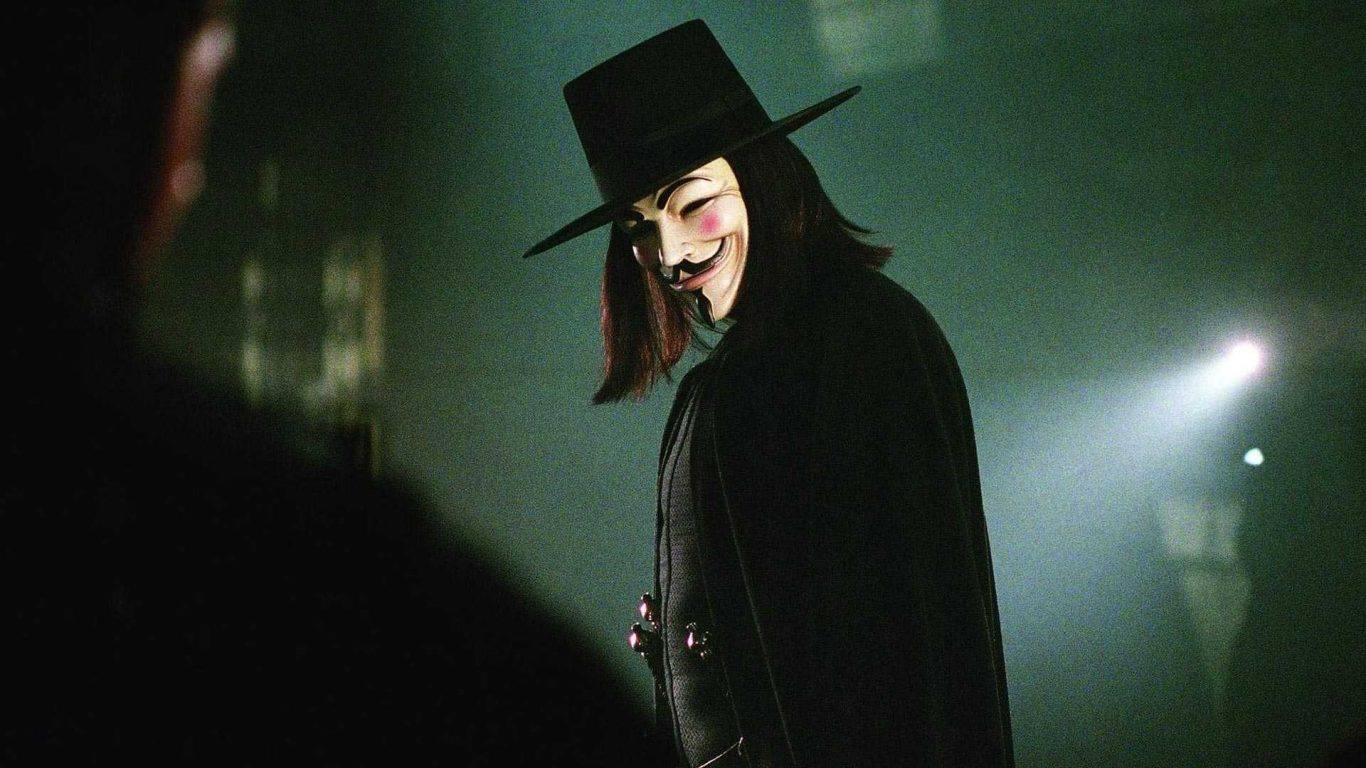
But it became even more complicated in the 1980s when V for Vendetta came out, first as a graphic novel and then as a movie. Most people, having no clue who Guy Fawkes was, started to see him as a heroic figure, fighting against fascists. So Fawkes gets rehabilitated but, awkwardly, people who admire him don’t realize he was actually a terrorist and a traitor intent on killing hundreds of perfectly innocent people in a huge explosion.

The V for Vendetta mask (and Guy Fawkes in the process) has been adopted both by spotty faced teenaged boys everywhere and by Anonymous. So what’s its meaning now? And Guy Fawkes Day – Bonfire Day – is denuded of the anti-Catholic rage, but also of the hatred towards Fawkes and the other plotters. In the age of the “War on Terror” a traitor/terrorist driven by religious zealotry has become a pop culture hero, while little children Ooo and Ahhh at the fireworks.

History is complicated.

A letter to my men

I’d like to take this opportunity to share with the men in my life what many of the women I know who have participated in #MeToo are saying to one another today.

We’re saying that we hope that men don’t focus only on the dramatic and horrifying stories that they’re hearing.

Don’t misunderstand. Those stories must be heard and they aren’t heard enough. But, if you focus on those stories, then you might not fully appreciate the everyday reality that most women are talking about when they say #MeToo.

The most destructive experiences most women have are the constant injustices and indignities – the wallpaper of our lives – that get completely internalized because if we actually noted every instance we would never get through life. The grinding, exhausting, unremitting combination of being simultaneously threatened and ignored saps energy, ambition, joy, and resilience. It impacts absolutely everything. So please, make sure to take that away with you, too.

If you don’t, then you also might be able to avoid asking yourselves what you have done, or not done, that made this constant condition of women’s lives continue, unremittingly, despite all of your support for women’s agency.


Just for the Record

My anger surrounding the whole Weinstein thing hasn’t been directed at people for what they did or didn’t do in the past. It’s directed at those who, even now, seem to need to check with their publicist and agent before supporting the women who are speaking out.
However, I also don’t buy the notion that because he was incredibly powerful there was nothing that anyone could do. When he was born, the doctor didn’t hold him up, smack him on the behind and say, “It’s a powerful Hollywood producer!” He was made. Made by hundreds of people who decided gradually, incrementally, as his power and his offenses grew, that his abuse of the vulnerable was a price they were willing to pay if they could hitch themselves to his star.
Is he alone? Of course not. But he’s the one being brought down right now. So, he’s the one we focus on right now. And one way that some of those enablers could expiate their guilt would be to stand up and form a protective phalanx around those who are coming forward. Own your enabling, and now enable a different, better kind of culture, one mea culpa at a time.

Embrace the Bad News

Stop running around in circles. Stop rending your garments. Stop wailing. Stop stomping your feet. Stop having fainting fits.

If you are still doing any of these things, either literally or metaphorically, STOP RIGHT NOW. Picture me as Cher in Moonstruck: *Slap* Snap out of it!

It is an indulgence and the longer it goes on the less it will be a perfectly reasonable human response and the more it will instead become the behavior of spoiled, ineffectual, soft and privileged people who aren’t used to any sort of adversity.

You don’t have the energy for this. Stop feeding the beast with your flesh. Stop feeding their fire with your oxygen. Make them provide the fuel for their machine of lies and destruction.

And for the record, this is not to say that we shouldn’t take to the streets, often and loudly. We need to scare them as much as is in our power, take over the news cycle as often as we can and make sure that others know they aren’t alone. But that can’t be the strategy.

I know it’s hard. Just as you manage to calm yourself a new affront to truth, decency, rationality, and humanity is thrown in your face.

Oh my god — he’s muzzled the EPA! It’s outrageous — he’s enshrined the Hyde Amendment! They’re monsters — the NEA and the NEH are on the chopping block!

And so we rail.

But you’ve got to stop. Just stop.

Take some deep breaths. Get really, really calm. Preternaturally calm. Scary, icy calm.

Now, embrace this. I don’t mean just listen to it. I mean internalize this as a truth that you cannot avoid — one of those truths like the death of someone you didn’t think you could live without and now must.

Everything is going to get very, very bad and it’s going to last for a long time.

We are used to thinking in short term bursts— 2-year congressional terms, 4-year presidential terms, the week delay to get your package from Amazon, the 3 days without hot water until the repair guy can come.

Look, even the paragraphs in this essay are short so that long blocks of text don’t overwhelm the readers’ eyes.

But if you’re serious about resisting and fighting back, then you need to get very calm and take stock of the situation realistically, with clarity. Let’s be brutally honest with ourselves about what will come — not may come:

1. The ACA will be repealed.

It will be replaced with some version of the Empowering Patients First Act, which will take millions of people off of insurance and over-burden the system, creating a sicker population, particularly among the poor, reducing individuals’ ability to complain because they will be more occupied with day to day subsistence.

This is already happening and cannot be stopped.

2. Social welfare programs and institutions will be starved of funds and staff or will be eliminated.

The cuts of sequestration will go even deeper so addicts, abused women and children, and the mentally ill will no longer get even the current meager assistance to be housed, clothed and fed. More will be on the streets. Society will appear more lawless and unstable, thus necessitating the harsh imposition of punitive order.

Planned Parenthood is the most obvious and immediate target of this but it is a red herring. As everyone gives money to PP, 10,ooo other programs that are less known and harder to encapsulate into a soundbite are already on the chopping block and will disappear without being notice by any except those who depend on them and those who run them.

3. Police will become increasingly oppressive as the laws they are tasked with enforcing become increasingly oppressive.

Law and order policing, the need to see a return on military investment by selling unused military equipment to police forces, and capitalist demand for for-profit prisons, will use the results of #2 above as the rationale for greater oppression.

The policy that the federal government recently adopted of no longer using for-profit prisons, and the trend towards lowering sentences for drug offenses and not pursuing drug arrests, have all been reversed or soon will be. Corporations like Walmart, Whole Foods, and even Victoria’s Secret depend on captive, below minimum wage labor; and GOP state legislatures depend on the use of for-profit prisons so that they can continue to not tax their wealthier citizens and businesses.

This will be the apotheosis of the prison industrial complex now that all three branches of government provide full support.

4. Regulations that protect citizens from poisons in their food, drugs, and environment will be weakened or removed.

All of this will be done in the name of creating jobs and wealth, although the resultant sickness, contamination and obesity will actually burden society more, creating expenses that will be pointed to as the reason why the government doesn’t have the money to enforce onerous regulations.

As government no longer occupies the position of protector, some private citizens, such as the Gateses, will step in and altruistically adopt certain standards and fund projects that promote those standards and practices. But this will further undermine society because it will return us to a pre-modern order where private initiatives rather than state regulation determines quality and safety. The only ones who will benefit are those who have the freedom to make choices.

5. Public education will be balkanized even more.

Betsy DeVos will likely not be sworn in and this will be seen as a victory. But whomever comes after her will probably be more qualified to implement the same philosophical approach to public education.

Those who will best serve the state, either in prison or out, by working at minimum wage or lower, will be provided with the most basic level of education necessary to be laborers and consumers. Of course, this is what’s already happened, so the thought that stopping DeVos will somehow make a different, is actually the most perfect example of why we must stop screaming and running around in circles playing a game of Cabinet Whack-a-Mole.

6. The unwritten rules that have governed the behavior of politicians and oligarchs will no longer be followed.

Those who have never paid attention to those rules, were never taught them in school (because of the decades-long balkanization of education discussed in #5) and, therefore, have no understanding that they benefited from them, won’t care because they won’t know these rules have been abandoned. So when others complain, those complaints will be understood as privileged people complaining about the removal of unwritten rules that benefited them. Far from creating any urgent demand that these rules be respected, a greater number of people will celebrate that they’re now being disregarded and encourage the oligarchy (or kakistocracy) to abandon them even further.

7. The written rules will be changed so that censorship silences critics.

The undereducated don’t care about censorship because they don’t partake of the information economy in the same way as educated people.

And don’t misunderstand my use of “undereducated.” There are millions of college graduates who are undereducated. They obtained a college degree with the least amount of intellectual engagement possible, without having acquired or understood the importance of an appetite for self-education.

So the process of reaction set out for the unwritten rules of #6 will apply here as well. Any bemoaning of this kind of censorship will be characterized as unpatriotic and elitist whining.

But the most important form of censorship is already well underway and the ground has been prepared for further inroads…

8. The basic tenet of democracy — free and fair elections in which one person gets one vote and can cast it without fear or coercion — will no longer occur.

And this is the real crux of the matter.

Don’t be distracted by all of the horrific things that I’ve listed above. It is so unlikely that there’s anything you can do about them that it is an irresponsible expense of energy to try. I have one addendum to that — if you are already positioned, through your job or extensive volunteerism or activism that you do in that field, then fight the knowledgable, targeted fight that you have the expertise to.

But everyone else — stop.

You must accept that you’ve already lost all of the little battles (I know, they aren’t little; they’re huge). But compared to this one, they’re miniscule.

You must focus on a time scale where 2 years is the shortest range. That is the only chance that we have to stop a 20-year cycle of catastrophe.

If we can’t outrun the efforts to disenfranchise that are revving up right now, then none of the rest of it matters one little bit. The last chance we have to stop the complete authoritarian takeover of the state is in 2 years.

Within that 2 years, these are the things that we must concentrate on: voter rights and redistricting. If we aren’t able to change the pincer-like strategy of removing people’s right to vote and creating districts where someone’s vote doesn’t matter, then there is literally no way that any specific policy or legislation can be protected for the foreseeable future. And I’m talking generation-level future.

Think clearly about where we are:

  • The GOP controls both houses and the White House.
  • At least one, and most likely two, Supreme Court justices will be chosen by the current administration.
  • Republicans control both houses in 32 state legislatures.
  • There are Republican governors in 33 states
  • The incoming Attorney General does not believe that it is the role of the his office to actively protect the civil rights of citizens or to proactively enforce civil rights legislation.
  • In 2013, the central provision of the Voting Rights Act was overturned and now there is no federal oversight of state voting laws, anywhere. And the current federal government and Supreme Court don’t look like they would be inclined to go against state laws now anyway.
  • 20 states have imposed new voter restriction laws since 2010.
  • Since this latest election 33 more such laws have been introduced in 16 states

So this is where we must concentrate our efforts. NOT on specific programs or agencies. Not on particular appointments or budget lines, as heart-wrenching as it might be to see them under attack.

Imagine that there’s a dam protecting a valley. Over years of neglect, the dam has started to spring leaks. These leaks are causing flooding in the valley. As time goes on, the dam springs more leaks until it takes up huge amounts of labor to keep plugging them all. But none of that labor can undo the reality — the dam is old and weak and it’s going to fail.

The people have to make a decision. Do they keep expending all of that energy on the leaks? Or, do they turn their full attention to building a new dam, in between the old one and the largest part of the community?

In the short term, there is going to be a lot of damage done to their property. Their lives aren’t going to be the same. And even after the new damn is built, they’ll probably still have to spend the rest of their lives rebuilding rather than getting to enjoy the gardens they’ve cultivated and the patios that they’ve built. And all of the people who lived in the space between the old dam and the new will lose everything.

But if they waste their energies endlessly running back and forth trying to plug all the holes…well, you see where I’m going with this.

So, take a deep breath. Life as you know it is over. Don’t try to deny that by reacting to every affront as if each of them is giving you a new piece of information about how bad it could get. We’re there.

You can mourn. But do so while you also coldly and clearly look at what needs to be done. We must mobilize to such a degree that the increased efforts to disenfranchise cannot succeed. And we need to act quickly. The long history of liberal and progressive complacency, coupled with the intoxication of victory and the civic illiteracy of the opposition can all work in our favor. They won’t expect us to be effectual, and they might not notice for a while. If we all focus, collectively, on this one crucial thing, then there’s a chance.

It’s an outside chance, but it’s there.

Milo Yiannopoulos and the free speech debate

  • Update: Anew round of outrage, on both sides of the ‘free speech’ divide, has flared up because Bill Maher has invited Yiannopoulos onto his show, and Jeremy Scahill has withdrawn from the lineup as a result. Of course, Maher is explaining his invitation to Milo with, basically, “Because, free speech.” This article was written following the Berkeley incident.

In Berkeley this week, a destructive protest resulted in the university canceling a speaking engagement by Milo Yiannopoulos, who is known for his hate speech about women, African-Americans, trans people, poor people and a host of other groups. This has yet again led to a debate about free speech and whether he was ‘silenced’ as a result of the actions of protesters and a liberal elite university president.

Whenever these occasions arise, commentators on the right gleefully point out the “liberal hypocrisy” behind silencing someone for their beliefs. And commentators on the left wring their hands at the “tactical error” of meeting hate speech with what some label censorship.

So I think it’s worth considering why we think free speech is so important, what we think is worth censoring, and whether we need to reexamine the philosophical motivation for protecting speech because we might have lost our way.

I use an elaborate role-playing pedagogy in the classroom. It’s called Reacting to the Past. Today there are dozens of games, but I use one of the very first ones designed, which is centered on the National Assembly of Revolutionary France as it tries to hammer out a new constitution, in 1791.

The reason I’m mentioning this here is that the explosion of the free press during the Revolution is central to how the political factions in the Assembly (groups of students) vie for popular support and power — often the same thing. That historical moment is when the free press and free political speech exploded in size and in vociferousness. And every time students play this 6-week-long game that’s the centerpiece of my course, I’m still amazed at how quickly they become advocates for varying degrees of censorship in pursuit of their characters’ agendas. Because if you were to ask their stance on the First Amendment just as people, every student would, by rote, declare their devotion to total free speech, consequences be damned. The American freedom of speech mantra.

The free speech concept, however, has different formulations throughout the West. Loosely speaking, the United States is of one philosophy, and everyone else is of another. And part of that has to do with the different reasons whysocieties think speech should be a protected right.

In the US, speech is not deemed something that can cause harm, in and of itself. There has to be the additional component of inciting someone to violence in a clear and present way. This is the reason so many hate crimes cannot be interpreted as such legally. In many cases, there isn’t an immediate relationship between an expression of hatred towards an explicitly identified group and harm being done to that group or one of its members. We cannot know the mind of a perpetrator, even though we have a pretty good idea.

Elsewhere in the West, there are numerous variations on a law prohibiting speech that incites hatred. This is the logical conclusion if you are of the belief that speech itself can cause harm — that it can be a form of violence on its own. But so can silencing. In Canada, which has a relatively young constitution, the limits to free speech are clearly set out. But so are protections against unwarranted state censorship. Hate speech has to meet 7 criteria before it can be prosecuted. Or, another way to look at it, all hate speech that falls short of these 7 tests is free from any risk of censorship.

In Europe, the EU laws on hate speech also describe it as incitement to violence or hatred (with those two words coming together in the sentence, indicating that there is an assumed relationship between the two). In the European setting, unlike the US, the risk doesn’t need to be immediate. For this reason, social media giants have been made culpable if they don’t work to remove or block certain types of hate speech on their platforms. It also doesn’t have to meet the Canadian criteria of being, among other things, 1. the most serious examples of the genre (which is a great way of describing the high bar), 2. deliberate, and 3. hateful within their social and historical context.

So we can see that along a sliding scale, the US is at one end, Europe at the other, and Canada sits somewhere in the middle.

Interestingly, no matter which country in the West we’re talking about, the philosophical discussion of free speech and censorship inevitably starts with John Stuart Mill. Of course, he never considered the atomized or viral speech environment that we have today. Nevertheless, his arguments for free speech, set out in On Libertyare still the foundation of the West’s protection of it. (Yes, the Constitution pre-dates Mill. But the arguments commonly used to defend the modern conception of free speech are strongly influenced by him.)

The thing is, Mill was a utilitarian. His measurement for the desirability of a behavior was its social good. For him, freedom of discussion needed to be protected because discussion fostered critique and improvement, which in turn strengthened society, benefiting the people. He doesn’t devote nearly as much time to what warrants censorship; however, for him, if harm resulted from speech without any concomitant benefit making the harm worthwhile, then it shouldn’t be protected simply for the sake of it.

Keep in mind, what Mill talked about was “freedom of discussion” — so he imbedded an assumption of social interaction into speech. He took the leap that no one is worrying about a citizen’s right to stand alone, in a field, and speak to thin air. He assumes a give and take, a back and forth, a dialectic through which maybe new ideas are discovered or old ones challenged and refined, so that in the end institutions are improved, and society is enriched.

And the thing is, when Americans have a knee-jerk reaction to the idea of curtailing speech, that assumption that more speech begets more ideas begets a better society, is still the source of that reaction but it’s been forgotten. We just jump right to: free speech = good.

So back to the game: My students, on the day before the game starts, would say that all speech must be allowed. But three weeks later, they are confronted with Robespierre’s demagoguery as they try to hammer out a Constitution and stabilize the country. Then they argue that newspapers calling for the people of Paris to kill members of the Assembly must be silenced, in the name of the common good. Using a public platform to incite people to commit murder is not in the interest of a healthy society, they realize.

So the whole Milo Yiannopoulos debate (or the other speaking engagements on campuses that have been canceled due to protests) can be taken up in two different ways: first, is Yiannopoulos being censored? Is his right to free speech being curtailed? And second, is there a greater good to be achieved by either making sure he can speak at Berkeley (or anywhere else), or by suppressing his speech?

In the first instance, Yiannopoulos is not being censored. He is not being told that he can’t say what he wants, write what he wants …tweet what he wants. Well, actually, that last one is where things get a bit sticky. Protected speech does not mean that others are forced to enable your speech. So if Twitter has a policy and Yiannopoulos defied it, they have a right to remove his account. If a publishing house decides not to publish his books, they have that right.

In fact, there’s a fundamental misunderstanding about the dynamics of these events. If we return to Mill’s focus on discussion rather than speech, it becomes more apparent. We must understand that the hubub itself is part of the speech, not just this moment and not just what originates with him. Yiannopoulos’ tweets, speaking engagements, and books — are one part of the discussion. And canceled Twitter accounts, protestors, or authors refusing to stay with the same publisher that has given him a contract, is another component of the discussion. Then the response by the university, the publisher, or his followers now relegated to Reddit (although Reddit has now entered the discussion too with its recent removal of its alt-right site) all constitute contributions as well.

This is far from censorship. His right to say what he’s saying (at least under US law) is only as protected as the right of every other player in this drama to ‘speak’ through whatever means they have. Even the canceling of the event doesn’t constitute censorship. Why? Because his ideas are freely accessible. The antifa protestors and the president of Berkeley haven’t silenced him. They have no standing to do so. They’ve just told him they want him to move his soapbox to the next corner.

The second question is the one we really should be focusing on. Is there a benefit to his speech or to its curtailment in that particular venue — a university campus? We need to grapple with our new understanding of what discourse is and how the structures of power are maintained. We now see that not everyone is able to participate in the same way in these civic discussions that Mill declares must go on for the good of society.

Mill didn’t think it was possible for speech to be harmful or violent. But today, we can see that denigration, particularly of an already marginalized group, further degrades that group’s standing in the wider society. As a result, there is actually the possibility that someone’s speech impinges on someone else’s right to dignity, equal protection, and freedom of association.

If we return to the Canadian model for a moment, this is exactly the constitutional test for hate speech that might need to be prosecuted. The Canadian constitution protects freedom of expression. But it also protects multiculturalism and equality. So if one right impinges on another, the greater good (which the utilitarian, Mill, would be all about) is achieved through the careful limitation of speech.

And this weighing of benefits and detriments is made easier by the fact that hate speech itself has no redeeming value to society. Speech in and of itself has no benefit. It’s what the discussion produces that does.

This finally brings us to the broader issue of whether students should allow Yiannopoulous (or someone else) to speak on their campuses when they know the speech will be hateful towards a group of people. And that comes down to answering a fairly simple question:

What benefit comes from it?

Uncomfortable conversations about contentious subjects should always take place on university campuses. But that’s not the same as hate speech. And hate speech fails on both counts. It has no inherent benefit to society — it doesn’t improve society through constructive critique or by the introduction of new ideas. And it actually impinges on other rights set out in the Constitution (and most university charters) — the dignity and equality of all persons. Without getting anyone any benefit in return.

And remembering that the protests and the reaction of the university are also a form of speech, part of the greater discussion over what America should be, we shouldn’t apologize or hand-wring about how this round ended up.

There’s nothing wrong with rejecting the premise being put forward and asking something else: whether Yiannopoulus should have the protected right to erode the rights of others by dehumanizing them? So you see, he isn’t being silenced. Milo’s just being forced to participate in a much larger discussion that he can’t control.