
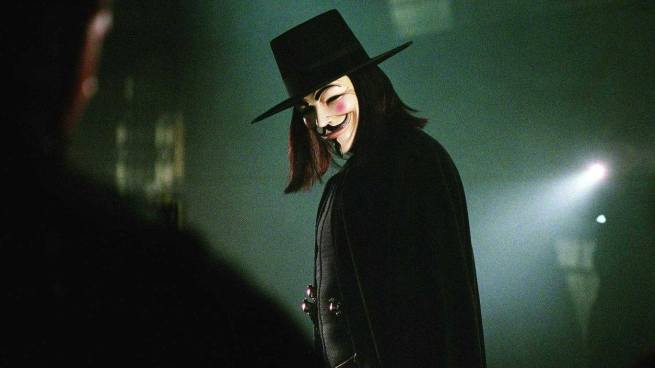
 Guy Fawkes Day (aka Bonfire Day) is a tricky holiday to understand because its meaning has changed. The man at the center of it has gone from being someone who was vilified and burned in effigy to someone who is celebrated and whose “face” is instantly recognizable. So here’s the deal:
When James I came to the throne after Elizabeth I died, Catholics in England were disappointed that he didn’t throw out the relatively new Church of England and switch the country back to Catholicism. So a bunch of them decided to blow up Parliament when the King was there, thereby killing everyone in power.
Fawkes was caught, in the cellar of Parliament, because he was the explosives expert putting the finishing touches to the whole thing.
So, November 5 was declared a day of thanksgiving for the traitors being caught. Over time, traditions developed: effigies of a “guy” (where the word comes from) were burned and fireworks set off (to represent the explosion that never happened).
So far so good. But here’s where the meaning of the holiday starts to get complicated.
Guy Fawkes Day, for a few hundred years, became a day when anti-Catholic rhetoric, and more than occasional violence, was common. After the failed Gunpowder Plot, legislation was passed that persecuted Catholics across the country, in a case of collective punishment. (It was actually called Pope Day in some places and it was the pope burned in effigy.) This gave official approval to anti-Catholic mob violence. Not an uncommon thing in those days, but also not something to be celebrated. Trying to get the day past its unfortunate anti-Catholic roots, it was renamed Bonfire Day in the late 20th C.
But it became even more complicated in the 1980s when V for Vendetta came out, first as a graphic novel and then as a movie. Most people, having no clue who Guy Fawkes was, started to see him as a heroic figure, fighting against fascists. So Fawkes gets rehabilitated but, awkwardly, people who admire him don’t realize he was actually a terrorist and a traitor intent on killing hundreds of perfectly innocent people in a huge explosion.
The V for Vendetta mask (and Guy Fawkes in the process) has been adopted both by spotty faced teenaged boys everywhere and by Anonymous. So what’s its meaning now? And Guy Fawkes Day – Bonfire Day – is denuded of the anti-Catholic rage, but also of the hatred towards Fawkes and the other plotters. In the age of the “War on Terror” a traitor/terrorist driven by religious zealotry has become a pop culture hero, while little children Ooo and Ahhh at the fireworks.
History is complicated.

 Martini Wisdom